
Legacy Mindset
Quick buck vs. defining technology: advice for students entering the AI era
Arizona Tech Week 2026
Founder · Grape ID
If you're not the one deciding how your data is used, then you're living through someone else's life. I'm building the tool that fixes that.

Origin
My first break came from two very different people. The first was a mentor I met in college, then reconnected with a decade later, in 2017. He sat me down and taught me Lean Startup. Not because it solves everything, but because it makes you consistent at solving the right problems. He answered every question I had, one-on-one and in group settings. I will never forget him.
The second was my first investor on Grape ID - the first person with the financial conviction to put money behind what we were building. What I value most isn't the check. It's that he took the time to understand the technology from a cybersecurity and technical perspective, at a stage when I still couldn't translate it. Engineers talk like engineers. We say 'the DAG protocol does this and that' and people look at us like we're speaking another language. He had the patience to see what I was actually building before I knew how to say it simply.
Those two people shaped how I think about mentorship now: a good mentor gives you frameworks that outlast the moment, and a good investor takes the time to see what you're really doing before you've learned to explain it.

My First Break
The mentor who taught him Lean Startup and the investor who bet on him before he could explain himself
Present
The problem I'm solving is what I call identity chaos: the scattering of our digital identities across wallets, cards, passwords, usernames, and platforms. You have a Costco card, a library card, a dozen apps, bank accounts, health records - and none of them talk to each other in a coherent, trustworthy way. And the entities that do connect them are doing it without your permission, for their benefit, not yours.
My solution is an identity agent. You download the app, it runs on your device, and it imports your emails, texts, calls, Facebook data, Google data, health data, financial data - everything. It all goes into your identity agent, which you control with cryptographic keys. Nobody else can access it. Because the data stays with you, your identity goes with you everywhere - VR, social media, payments, government credentials, anything. It answers the question: is this person real? Is this an AI? Automatically and cryptographically.
We're also a maintainer of the Linux Foundation open source project Identity Bot, and I co-lead the Arizona chapter of the AI Collective. The infrastructure runs through the Linux Foundation's decentralized trust network - fully open source, fully auditable. Utah just passed a state-endorsed digital identity law. It went into effect May 6th. Other states are joining. This is no longer theoretical.

Whose Data Is It?
Identity chaos: why your digital identity is living through someone else's rules
Future
I want to eliminate data brokers entirely - and make sure advertisers pay you directly for your attention.
The thing I'm most excited about is the Attention Marketplace. Right now, data brokers and social media platforms take your data, violate your privacy, and sell it to advertisers, and you get nothing. I want to flip that completely. Advertisers send their targeting requests and payment to your identity agent. Your agent decides if it matches your interests. If it does, you get paid to engage. The money goes directly to you, not to Facebook, not to a broker. That's the commercial future of Grape ID.
And deeper than that, we're working on protocol skills - standardized, open-source ways for AI agents to make payments, verify credentials, and interact with the world without creating a new kind of chaos. Every AI model is building its own version of 'how to make a payment.' That's the same fragmentation we're trying to solve. The Linux Foundation hosts the protocol so anyone can inspect it, agree on it, and trust it. Hardware-backed remote attestation gives you cryptographic proof that the exact protocol you trusted is the one that ran. That's how you get to real reliability at scale.

Predictive Chipotle
The Attention Marketplace and getting paid for your own data
Fast Facts
Company
Grape ID
Open Source
Identity Bot (Linux Foundation)
Community
Co-Lead, Arizona AI Collective
Focus
Decentralized Digital Identity
Years Building
7 years
Watch More
Quick buck vs. defining technology: advice for students entering the AI era

Knowledge, skills, and abilities: what Rob looks for when evaluating builders

On building the Jarvis for your health data, and why it has to stay on your device

On finding the right problems and the team dynamics that make or break startups

Protocol skills: standardizing AI agent capabilities across platforms

AI primitives: why skills, abilities, and agents are the building blocks
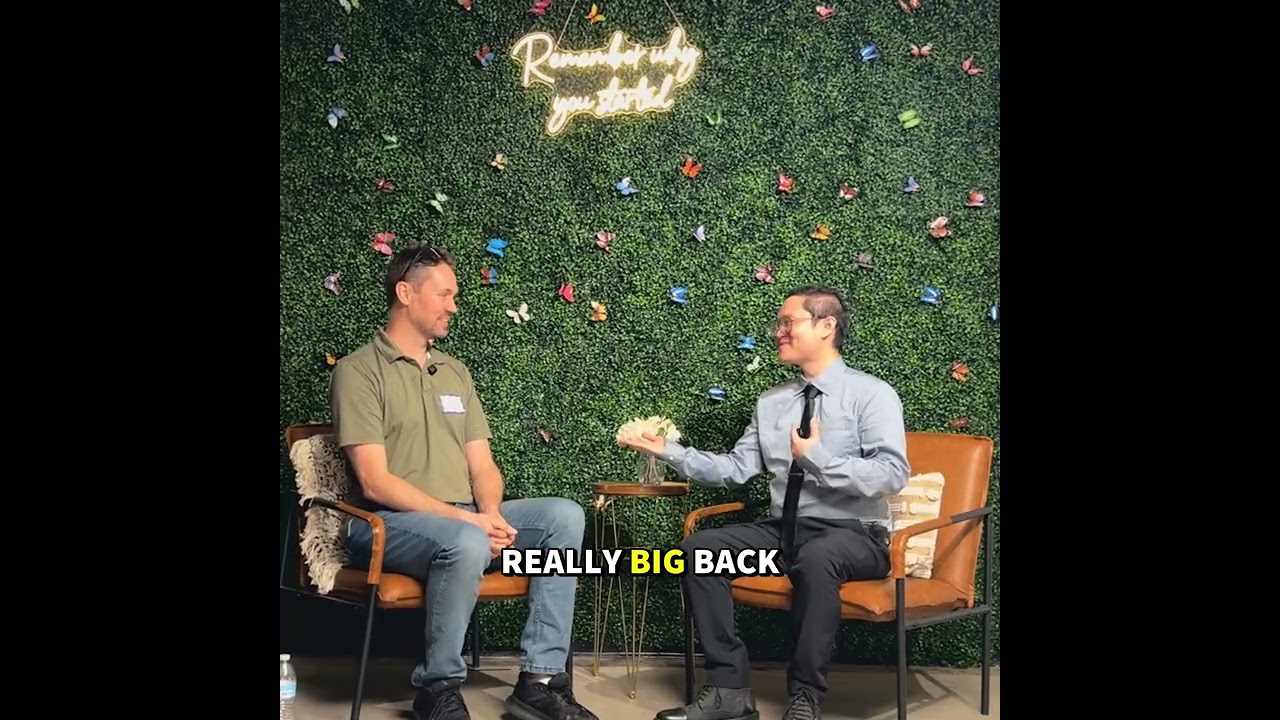
Rob on his actual first job — stacking chairs and tables at his local church — where he met the mentor who built database systems for hospitals across Southern California.
“If you're not the one that decides how your data is used and your digital identity, then that means you're living through someone else's life.”
Follow Rob Anderson's work or reach out through the links below.
Related profiles from Arizona Tech Week 2026

Co-Founder · Illust
Provenance is the foundation of the spatial web — without it, creators can't own what they make.
View Profile →
Co-Founder, Strategist & Cypherpunk · Lunar Digital Assets
We kicked off DeFi summer on Polygon. Now we're taking everything we built and bringing it to Litecoin, the most underrated digital asset in the game.
View Profile →
Founder & Certified Public Accountant · Kustov CPA
If you trade in seconds, you crunch in minutes, and we built the ledger that turns every crypto transaction into a clear, auditable insight.
View Profile →
Enterprise Architect & Fractional CTO · IT Yug, LLC
From BASIC in 1987 to architecting PayPal Credit. Now I'm betting everything on relationships as the engine of small business survival.
View Profile →
Game Designer & Indie Developer
Games, AI, and blockchain are converging into something nobody has ever seen before. I have been chasing that intersection for seven years, and I can finally see where it leads.
View Profile →